How Bob Dylan used the ancient practice of ‘imitatio’ to craft some of the most original songs of his time

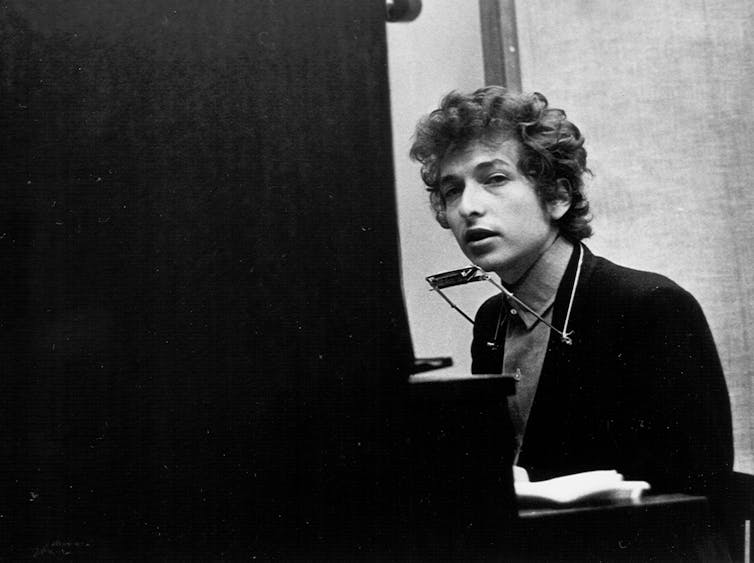
Dylan’s complex creative process is unique among contemporary singer-songwriters. Michael Ochs Archives/Getty Images

Raphael Falco, University of Maryland, Baltimore County

Over the course of six decades, Bob Dylan steadily brought together popular music and poetic excellence. Yet the guardians of literary culture have only rarely accepted Dylan’s legitimacy.

His 2016 Nobel Prize in Literature undermined his outsider status, challenging scholars, fans and critics to think of Dylan as an integral part of international literary heritage. My new book, “No One to Meet: Imitation and Originality in the Songs of Bob Dylan,” takes this challenge seriously and places Dylan within a literary tradition that extends all the way back to the ancients.

I am a professor of early modern literature, with a special interest in the Renaissance. But I am also a longtime Dylan enthusiast and the co-editor of the open-access Dylan Review, the only scholarly journal on Bob Dylan.

After teaching and writing about early modern poetry for 30 years, I couldn’t help but recognize a similarity between the way Dylan composes his songs and the ancient practice known as “imitatio.”

Poetic honey-making

Although the Latin word imitatio would translate to “imitation” in English, it doesn’t mean simply producing a mirror image of something. The term instead describes a practice or a methodology of composing poetry.

The classical author Seneca used bees as a metaphor for writing poetry using imitatio. Just as a bee samples and digests the nectar from a whole field of flowers to produce a new kind of honey – which is part flower and part bee – a poet produces a poem by sampling and digesting the best authors of the past.

Bee collects pollen from a white flower.
To Seneca, the poetry writing process was akin to a bee making honey. K_Thalhofer/iStock via Getty Images

Dylan’s imitations follow this pattern: His best work is always part flower, part Dylan.

Consider a song like “A Hard Rain’s A-Gonna Fall.” To write it, Dylan repurposed the familiar Old English ballad “Lord Randal,” retaining the call-and-response framework. In the original, a worried mother asks, “O where ha’ you been, Lord Randal, my son? / And where ha’ you been, my handsome young man?” and her son tells of being poisoned by his true love.

In Dylan’s version, the nominal son responds to the same questions with a brilliant mixture of public and private experiences, conjuring violent images such as a newborn baby surrounded by wolves, black branches dripping blood, the broken tongues of a thousand talkers and pellets poisoning the water. At the end, a young girl hands the speaker – a son in name only – a rainbow, and he promises to know his song well before he’ll stand on the mountain to sing it.

“A Hard Rain’s A-Gonna Fall” resounds with the original Old English ballad, which would have been very familiar to Dylan’s original audiences of Greenwich Village folk singers. He first sang the song in 1962 at the Gaslight Cafe on MacDougal Street, a hangout of folk revival stalwarts. To their ears, Dylan’s indictment of American culture – its racism, militarism and reckless destruction of the environment – would have echoed that poisoning in the earlier poem and added force to the repurposed lyrics.

Drawing from the source

Because Dylan “samples and digests” songs from the past, he has been accused of plagiarism.

This charge underestimates Dylan’s complex creative process, which closely resembles that of early modern poets who had a different concept of originality – a concept Dylan intuitively understands. For Renaissance authors, “originality” meant not creating something out of nothing, but going back to what had come before. They literally returned to the “origin.” Writers first searched outside themselves to find models to imitate, and then they transformed what they imitated – that is, what they found, sampled and digested – into something new. Achieving originality depended on the successful imitation and repurposing of an admired author from a much earlier era. They did not imitate each other, or contemporary authors from a different national tradition. Instead, they found their models among authors and works from earlier centuries.

In his book “The Light in Troy,” literary scholar Thomas Greene points to a 1513 letter written by poet Pietro Bembo to Giovanfrancesco Pico della Mirandola.

“Imitation,” Bembo writes, “since it is wholly concerned with a model, must be drawn from the model … the activity of imitating is nothing other than translating the likeness of some other’s style into one’s own writings.” The act of translation was largely stylistic and involved a transformation of the model.

Romantics devise a new definition of originality

However, the Romantics of the late 18th century wished to change, and supersede, that understanding of poetic originality. For them, and the writers who came after them, creative originality meant going inside oneself to find a connection to nature.

As scholar of Romantic literature M.H. Abrams explains in his renowned study “Natural Supernaturalism,” “the poet will proclaim how exquisitely an individual mind … is fitted to the external world, and the external world to the mind, and how the two in union are able to beget a new world.”

Instead of the world wrought by imitating the ancients, the new Romantic theories envisioned the union of nature and the mind as the ideal creative process. Abrams quotes the 18th-century German Romantic Novalis: “The higher philosophy is concerned with the marriage of Nature and Mind.”

The Romantics believed that through this connection of nature and mind, poets would discover something new and produce an original creation. To borrow from past “original” models, rather than producing a supposedly new work or “new world,” could seem like theft, despite the fact, obvious to anyone paging through an anthology, that poets have always responded to one another and to earlier works.

Image of New York City street with banner reading 'Gaslight Poetry Cafe.'
Dylan performed at New York City’s Gaslight Cafe, a popular folk music venue. Bettmann/Getty Images

Unfortunately – as Dylan’s critics too often demonstrate – this bias favoring supposedly “natural” originality over imitation continues to color views of the creative process today.

For six decades now, Dylan has turned that Romantic idea of originality on its head. With his own idiosyncratic method of composing songs and his creative reinvention of the Renaissance practice of imitatio, he has written and performed – yes, imitation functions in performance too – over 600 songs, many of which are the most significant and most significantly original songs of his time.

To me, there is a firm historical and theoretical rationale for what these audiences have long known – and the Nobel Prize committee made official in 2016 – that Bob Dylan is both a modern voice entirely unique and, at the same time, the product of ancient, time-honored ways of practicing and thinking about creativity.

Raphael Falco, Professor of English, University of Maryland, Baltimore County

This article is republished from The Conversation under a Creative Commons license. Read the original article.
Alzheimer’s might not be primarily a brain disease. A new theory suggests it’s an autoimmune condition.

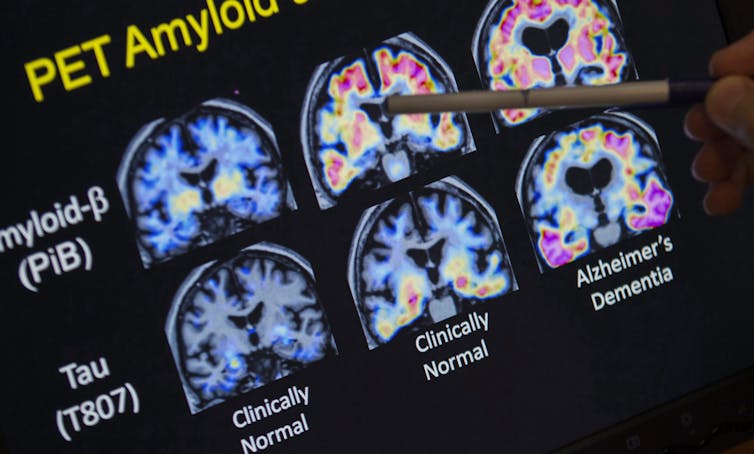
A new theory of Alzheimer’s disease reassesses the role of beta-amyloid in the brain. (AP Photo/Evan Vucci)

Donald Weaver, University of Toronto https://narrations.ad-auris.com/widget/the-conversation-canada/alzheimer-s-might-not-be-primarily-a-brain-disease–a-new-theory-suggests-it-s-an-autoimmune-condition-

The pursuit of a cure for Alzheimer’s disease is becoming an increasingly competitive and contentious quest with recent years witnessing several important controversies.

In July 2022, Science magazine reported that a key 2006 research paper, published in the prestigious journal Nature, which identified a subtype of brain protein called beta-amyloid as the cause of Alzheimer’s, may have been based on fabricated data.

One year earlier, in June 2021, the U.S. Food and Drug Administration had approved aducanumab, an antibody-targeting beta-amyloid, as a treatment for Alzheimer’s, even though the data supporting its use were incomplete and contradictory. Some physicians believe aducanumab never should have been approved, while others maintain it should be given a chance.

With millions of people needing an effective treatment, why are researchers still fumbling in this quest for a cure for what is arguably one of the most important diseases confronting humankind?

Escaping the beta-amyloid rut

For years, scientists have been focused on trying to come up with new treatments for Alzheimer’s by preventing the formation of brain-damaging clumps of this mysterious protein called beta-amyloid. In fact, we scientists have arguably got ourselves into a bit of an intellectual rut concentrating almost exclusively on this approach, often neglecting or even ignoring other possible explanations.

Illustration showing red clusters of amyloid plaques in brain tissue
Studying beta-amyloids as abnormal proteins that cause Alzheimer’s disease has not translated into a useful drug or therapy. Shutterstock

Regrettably, this dedication to studying the abnormal protein clumps has not translated into a useful drug or therapy. The need for a new “out-of-the-clump” way of thinking about Alzheimer’s is emerging as a top priority in brain science.

My laboratory at the Krembil Brain Institute, part of the University Health Network in Toronto, is devising a new theory of Alzheimer’s disease. Based on our past 30 years of research, we no longer think of Alzheimer’s as primarily a disease of the brain. Rather, we believe that Alzheimer’s is principally a disorder of the immune system within the brain.

The immune system, found in every organ in the body, is a collection of cells and molecules that work in harmony to help repair injuries and protect from foreign invaders. When a person trips and falls, the immune system helps to mend the damaged tissues. When someone experiences a viral or bacterial infection, the immune system helps in the fight against these microbial invaders.

The exact same processes are present in the brain. When there is head trauma, the brain’s immune system kicks into gear to help repair. When bacteria are present in the brain, the immune system is there to fight back.

Alzheimer’s as autoimmune disease

We believe that beta-amyloid is not an abnormally produced protein, but rather is a normally occurring molecule that is part of the brain’s immune system. It is supposed to be there. When brain trauma occurs or when bacteria are present in the brain, beta-amyloid is a key contributor to the brain’s comprehensive immune response. And this is where the problem begins.

Because of striking similarities between the fat molecules that make up both the membranes of bacteria and the membranes of brain cells, beta-amyloid cannot tell the difference between invading bacteria and host brain cells, and mistakenly attacks the very brain cells it is supposed to be protecting.

This leads to a chronic, progressive loss of brain cell function, which ultimately culminates in dementia — all because our body’s immune system cannot differentiate between bacteria and brain cells.

Close-up view of a section of a human brain
A section of a human brain with Alzheimer’s disease displayed at the Museum of Neuroanatomy at the University at Buffalo, in Buffalo, N.Y. (AP Photo/David Duprey)

When regarded as a misdirected attack by the brain’s immune system on the very organ it is supposed to be defending, Alzheimer’s disease emerges as an autoimmune disease. There are many types of autoimmune diseases, such as rheumatoid arthritis, in which autoantibodies play a crucial role in the development of the disease, and for which steroid-based therapies can be effective. But these therapies will not work against Alzheimer’s disease.

The brain is a very special and distinctive organ, recognized as the most complex structure in the universe. In our model of Alzheimer’s, beta-amyloid helps to protect and bolster our immune system, but unfortunately, it also plays a central role in the autoimmune process that, we believe, may lead to the development of Alzheimer’s.

Though drugs conventionally used in the treatment of autoimmune diseases may not work against Alzheimer’s, we strongly believe that targeting other immune-regulating pathways in the brain will lead us to new and effective treatment approaches for the disease.

Other theories of the disease

A drawing of a brain inside a yellow light bulb, against a green background.
It is gratifying to see new thinking about this age-old disease. (Pixabay)

In addition to this autoimmune theory of Alzheimer’s, many other new and varied theories are beginning to appear. For example, some scientists believe that Alzheimer’s is a disease of tiny cellular structures called mitochondria — the energy factories in every brain cell. Mitochondria convert oxygen from the air we breathe and glucose from the food we eat into the energy required for remembering and thinking.

Some maintain that it is the end-result of a particular brain infection, with bacteria from the mouth often being suggested as the culprit. Still others suggest that the disease may arise from an abnormal handling of metals within the brain, possibly zinc, copper or iron.

It is gratifying to see new thinking about this age-old disease. Dementia currently affects more than 50 million people worldwide, with a new diagnosis being made every three seconds. Often, people living with Alzheimer’s disease are unable to recognize their own children or even their spouse of more than 50 years.

Alzheimer’s is a public health crisis in need of innovative ideas and fresh directions. For the well-being of the people and families living with dementia, and for the socioeconomic impact on our already stressed health-care system coping with the ever-escalating costs and demands of dementia, we need a better understanding of Alzheimer’s, its causes, and what we can do to treat it and to help the people and families who are living with it.

Donald Weaver, Professor of Chemistry and Director of Krembil Research Institute, University Health Network, University of Toronto

This article is republished from The Conversation under a Creative Commons license. Read the original article.

It’s time to take Kim Jong Un and his nuclear threats seriously

Kim Jong Un remains focused on reunifying Korea – on his terms. Anthony Wallace/AFP via Getty Images

Sung-Yoon Lee, Tufts University

As the West frets over the possibility of Vladimir Putin turning to nuclear weapons in Ukraine, there is a risk that similar threats posed by another pariah leader are not being treated as seriously – those of North Korea’s Kim Jong Un.

The isolationist East Asian nation has conducted seven nuclear-capable missile blasts over the course of 15 days, from Sept. 25 to Oct. 9, 2022. One flew over Japan, plunging into the Pacific after flying 2,800 miles – a distance that puts the U.S. military base in Guam within range.

Then, on Oct. 10 – the 77th anniversary of the founding of North Korea’s communist Workers Party – state media announced that Kim had personally conducted field guidance of his nation’s “tactical nuclear operation units,” which displayed the capacity to “hit and wipe out” enemy targets.

True, Russia’s enormous nuclear arsenal make its threats more credible than North Korea’s. Moscow has the means, and fear over defeat in Ukraine could provide the motive.

There is another reason that Kim’s nuclear threats may sound less ominous, if not entirely hollow. North Korea’s leader strikes many in the West almost as a laughable figure – a narcissistic, well-nourished dictator with, to many, a comical look. Yes, he harbors worrying nuclear bomb ambitions and presides over a desperate state facing widespread hunger. But his occasional threats to nuke his southern neighbor – South Korea – are greeted by many as little more than buffoonish bellicosity. Take, for example, then-President Donald Trump’s 2017 speech at the United Nations in which he belittled Kim as a “Rocket Man on a suicide mission.”

But as a scholar of Korean history who has watched as the North’s regime has threatened to destabilize the region, I believe Kim must be taken seriously. He is deadly serious about completing his grandfather’s and father’s mission of reunification of the Korean peninsula. It is the dynasty’s “supreme national task,” and there is little to suggest that Kim won’t resort to any length to make that happen.

Preemptive nuclear strikes

In 2022 alone, North Korea has fired over 30 missiles, including six intercontinental ballistic projectiles. These activities are in “open breach of United Nations sanctions,” as the U.N. Panel of Experts on North Korea reported in September.

Yet, there has not been a single new United Nations Security Council Resolution passed in response to these serial violations. And I doubt one will be forthcoming even in the wake of a major nuclear test, which is looming. Security Council members Russia and China, which supported previous U.N. sanctions following North Korean missiles and nuclear tests, are unlikely to do so again this time amid the growing geopolitical rift with the West. Both countries actively blocked such moves led by the U.S. earlier in the year.

Worse, recent remarks by Putin and Kim have brought back the once unthinkable notion of a nation preemptively nuking a neighboring state.

In September, North Korea promulgated a new “law on the state policy on the nuclear forces.” It sets out the conditions under which North Korea would use nuclear weapons. In broad and vague terms, the law cites “taking an upper hand in a war” and being “inevitably compelled and cannot help but use nuclear weapons” as reasons to resort to the ultimate weapon.

A TV screen shows a map of North Korea with the trajectory of missiles on it.
Reporting of North Korea’s missile launches. Kim Jae-Hwan/SOPA Images/LightRocket via Getty Images

In outlining a fairly open-ended approach to nuclear action, Kim has escalated the rhetoric and attempted to normalize the right to strike first. It lays the groundwork for using any “hostile” move by South Korea – which the regime defines broadly as anything between criticism of its human rights violations to combined defensive military exercises with the United States – as as a pretext for preemptive nuclear strikes.

Kim appears to be arguing that it is his right to use nuclear weapons whenever he deems it necessary. It is a truly frightening prospect.

A cycle of escalation

The recent nuclear-capable missile launches, coming just weeks after a new nuclear doctrine and coinciding with Putin’s escalation in Ukraine, looks to paint the U.S. into a corner and seize on the growing Cold War split. Kim is forging new norms in the politics of the region.

It may be hard to accept that North Korea – a small economic actor compared with the U.S., China, Russia, Japan and South Korea – has outmaneuvered its bigger interlocutors. But, over the past 30 years of nuclear diplomacy, it has been North Korea that has mostly called the shots – from proposing talks, agenda-setting and agenda-shifting to deciding when to walk away.

In the process, Pyongyang has wrested away billions of U.S. dollars’ worth of cash, food, fuel and other goods from other countries while building approximately 50 nuclear bombs, ICBMs and other strategic weapons.

From the Bill Clinton and George W. Bush administrations alone, North Korea received over US$1.3 billion worth in aid in return for repeated false pledges of denuclearization.

North Korea’s strategy throughout has been one that combines calculated provocations, graduated escalation and a post-provocation peace ploy. But the end game for Kim, like his father and grandfather before him, remains the same: triumphing over South Korea and incorporating its people and territory under the North’s jurisdiction.

To enable this, North Korea will need to repeat its cycles of provocations and deescalation while continuing to grow its military arsenal to the extent that it becomes a clear and present nuclear threat to the U.S. mainland and an unbearable regional liability. At that point, so the strategy goes, it can push the U.S. to withdraw forces in South Korea, rendering the South vulnerable to submission to the North’s plans.

Kim’s grand strategy

Reunification under the North’s terms is central to Kim’s plan. As such, international observers might be wise to focus more on the purpose of Kim’s provocations, rather than the cause.

Pondering “What caused Kim to test a nuke?” may lead some into the same trap as asking, “What caused Putin to invade Ukraine?”

Both questions assume the aggressor to be reactive rather than proactive and ignore his grandiose intentions.

Kim Jong Un has a grand strategy. As long as South Korea exists as a richer and more democratically legitimate Korean state that serves as a magnet for his own people, the specter of the German model of reunification – under which the richer Germany absorbed the poorer one – hovers ominously for Kim. And that, he cannot allow.

As such, world leaders must beware: When narcissistic tyrants make nuclear threats, they carry menacing meaning – even when uttered by unusually odd-looking despots.

Sung-Yoon Lee, Professor in Korean Studies, Tufts University

This article is republished from The Conversation under a Creative Commons license. Read the original article.

Ray’s Random Thoughts 10-17-2022

Photo by Mathias Reding on Pexels.com

Seems our world is set in a pattern of division, fear, and hate. People taking sides and closing their minds and hearts to compassion, logic, and tolerance. We have the military and political powers of the east and west clashing over policy differences along with ideologies. Conservatism and Liberalism in the world has become more extreme thus is has created polarization not only in the political arena but in the civilian population as well.

Throughout my lifetime, I have watched The west (U.S., NATO, etc) try and spread and apply their ideals across the globe, and the East also trying to do the same. The problem is not the act of trying to spread your political and national policies, it is the lack of understanding toward the other side. There are more ways than one for a nation to flourish and more than one way for us to find a compromise between both sides.

I pray cooler heads to prevail, and that every side can find a way to make it a world we all can succeed in and live in. This is the time for Countries such as China to act more as a peacemaker and moderators than a silent on-looker or cheerleader against the west. I understand Taiwan is a problem spot for the east and west, but as long as China continues down the peaceful path of trying to resolve the issue the world may avoid a world war or at the least a war between superpowers. War, Military force should always be the last and most avoided solution to any problem.

Photo by RODNAE Productions on Pexels.com

The East and West can be great partners in this world, it has been proven in the past with the economic friendship we once had and embraced in the past. If we only could reset the relationships between our countries, forget and forgive the past and move forward as friends and allies. Think what we could do if Russia, Europe, China and USA all worked together to fix the problems we are facing in the world. We all want to live in a world of peace, I even think Putin would prefer peace over war if he could find a way to do it and benifit Russia.

We need to find a way to depolarize the world, bring down the rhetoric and find the middle ground. Time to bring Exrtremism back towards being moderate, stop looking for a boogie man to fight and see the real enemy is not each other but the problems we face as a world. We dont need a West or East dominated world, we need a world that all sides can sit down and find common ground so they can work together to make the world a better place for all sides.

Hopefuly we will find a more peacefull resolution to the war in Ukraine and keep it a peacefull path when it comes to Taiwan. We also have the Iranian issues going on and North Korea stirring up more problems. We need to bring our selves back to a peaceful and co-operative state before we wind up with a war that will lead to a extiction event such as nuclear war.

I know I am just a dreamer, a single insignifgant voice in a sea of many. There will be many who think I am foolish in the way i think and how i hope for a better world. But that will not stop me from praying and holding on to the hope one day we may all find a better way.

Peace and Blessings to all

Ray’s Random Thoughts 9-24-22

Photo by Pixabay on Pexels.com

A World on the brink of a possible world war, facing food shortages, dealing with inequity in both financial and social perspectives and a world being divided by political extremes. There are a lot of problems this world is facing and more division over how to deal with the problems and/or to move forward. Adding to the problems we face is the politicization of every issue making it a harder path toward fixing the problems at hand.

Climate Change

Photo by Guillaume Falco on Pexels.com

The fight over climate change reminds me of the old battle over tobacco and how it is bad for one’s health back in the 60s and 70s. Tobacco companies hiring/paying scientists to say smoking wasn’t all that bad for your health while those scientists and doctors who had good ethics fought to get people informed about the dangers of tobacco use. The same shell game is happening now with climate change. You have the majority of Scientists showing us the truth that things are warming up due to carbon emissions but a group of paid scientists claiming that climate change is either not real or not as bad as reported.

Get only a percentage of people to believe the misinformation on any given subject and you cause enough division to create doubt. Doubt is a tool that is used to sway people and to keep any real political movement from solidifying in the government. Big Energy companies dislike green initiatives because they have to invest in research and development. They prefer to keep things as they are so they don’t have to invest much and rake in higher profits. They adopt the model of lobbying congress and greasing palms which may cost them but far less than it would cost to do the right thing.

Though there is some light shining through, seems more and more energy companies are moving towards renewable energy and green technologies but still it’s far less than needed. Evidence is growing that supports the climate change camp, more ice melting in Greenland and Antarctica, heatwaves across the world and we are heading into a very bad hurricane season it seems. Hopefully, the companies and industries that used to be the most resistant to going greener will start coming on board and moving things towards a brighter and cleaner world to live in.

Like any problem we face as a world, we can not totally rely on the government or expect big businesses to fix it on their own. It is a whole team effort, we all have to pitch in to make a difference. Sacrifices may be needed from all sides to make a difference and those sacrifices will lead to a better world for all. In time we will see technology advance to the point where we will gain far more benefits than the sacrifices we have made.

What kind of Sacrifice will most people have to make? Drinking filtered water from the tap instead of buying bottled water for one. Repurposing some of what we once threw away and recycling when we can not repurpose things. We may have to cut back on joy rides and unnecessary trips to shrink our carbon footprint as well. Change is hard for most people, who want to change how things are when it will create more work for us to do.

Humans inherently seek out the easiest way of doing things, so if they have to change a way of life to one that takes more effort they resist. It takes some work to make a change and requires one to have a motivator to get them to start the process. One would think that clean water, avoiding even higher temperatures during summer along with avoiding more floods and fires would be good motivation for most of us to start to change. Time will tell if humanity will rise up and deal with climate change or if we get stuck debating it till we arrive at a world that cant support life.

Financial Inequality and Inequity

Photo by Timur Weber on Pexels.com

First, let’s look at the difference between Inequality and Inequity, Inequality basically means an uneven distribution of something, and inequity means similar but focuses on the fact that it’s an unjust distribution or that there is some sort of unfair rule or laws preventing the fair distribution of something. Usually, inequality leads to inequity in most cases, and that theme seems to run strong throughout all society.

There are many roadblocks in the way for those of color, those who are immigrants, and those who are near or below the poverty level in the U.S., There also seems to be an unfair advantage for those who have children or who are around college age vs those who have no children and or those nearing retirement and those who has reached retirement age. During the Covid 19 pandemic, there have been many great efforts to lift families with children out of poverty and relieve college students of the debt they incurred from going to college.

Then there is the unfair credit system that seems to disadvantage people of color over others, though it has gotten better through the years there is still a lot to be improved on that front. Unfortunately, our Government does not see the need to help the single, childless, and older people during this time as much as they covet the votes of those they have fought diligently to help. They forget that those they are choosing to ignore or put on the back burner are also voters and the majority of them have been taxpayers for many decades.

Every man, woman, and child deserves a decent place to live, a means to feed themselves and live a meaningful life. The age, color, religion, or sexual preference of a person should never play into if and how much help they receive from any source and nor should it play any role in the quality of life they have. I am glad at least the government is helping those they are, just wish they would remove their blinders and see the rest of the people they are leaving behind.

A Democracy or the Democratic Republic like ours is built on the premise that We the People are the ones in charge and sadly too many times our representatives and senators do not serve us as much or as good as they should. Thanks to Lobbyists and backroom deals the people lose out against big businesses and wealthy organizations. Obviously, there are some changes needed in the capital to deal with such things.

Now with all that said, the great American dream is not dead, it is just far more difficult for many of us to reach nowadays. I believe the U.S. is still one of the greatest nations to live in. But like any great thing, it has its ups and downs and needs improvement from time to time. The loss of the Lower and regular middle class leaves us with just the higher middle class, the wealthy, and the poor/impoverished population. Hopefully, in time we can reestablish a wider-ranged middle class once again and pull the majority of people out of the poverty level of life.

Food Supply Issues

Photo by Tom Fisk on Pexels.com

When it comes to food supply there are many factors at play and isn’t a simple thing to address. Since the onset of the pandemic, the supply chain has been under stress and it has been very evident through higher prices and near-empty shelves in grocery stores. Some of the things that are affecting the supply chain are as follows:

  • Panic buying / Hoarding (seen during the pandemic)
  • Transportation issues (labor disputes and logistics)
  • Fuel Prices
  • Mega Farming and centralization of farming in countries such as the us
  • Ukrainian War
  • Political Issues (tariffs, sanctions, etc.)
  • Outsourcing of food production to unfriendly or unreliable sources.
  • Closing down of local and smaller farms across the country
  • OverConsumption ( though not widespread, is still a source of some of the food shortages)
  • Weather/fires (flooding, natural disasters, drought, loss of farmable land and safe water, etc.)

Those are just some of the obstacles we are dealing with when it comes to keeping the food supply at a good level. Though now the fuel prices are falling the rest of the issues are still there and need to be addressed. Another issue is food quality which is an important issue that also needs to be addressed. We need a more decentralized farming system, more local farms would relieve some of the stress on the transportation of food and would also keep from exhausting viable farmland since it would not overwork the soil as bad as megafarms do. There is the issue of seasonal crops when it comes to local farms but then that’s when we rely on other sources that are hopefully within our own country. Some things will have to be from global food sources to keep availability year-round.

Conclusion

Photo by Ann H on Pexels.com

Even though I am no expert on any of the subjects above, I do have my opinions on them and I am a bit worried over the direction things are going at this point in time. I leave the solutions to these issues to those who are far more qualified than myself. But I will say that it will be solutions that require all of us to be a part of one way or another. Change will not come until we enact change in ourselves and how we do things in this world.

I am a firm believer in the power of humanity when we all join together to face the problems we face. Humanity has survived many natural disasters and many self created situations as well, there is nothing we can’t do if we join together.

Blessings to all

Pick pack 1 of 10 by Shokan Radio DJ Dovestar

Mix Genre collection of Creative Commons Licensed Music

1. Niki J Crawford – Ridiculous Love

2. Always the Alibi – After all I’ve done

3. Drunk Souls – There is a place

4. Invisible Tears – The Traitor

5. Kellee Maize – Want

6. Good Intentions – No time to waste (Radio Remix)

7. Guess – Open your eyes

These Pick Packs are solely for Providing Free promotion and for Entertainment Purposes. The Music is licensed under Creative Commons Licenses.

To Download the files visit : https://archive.org/details/20220922_20220922_1809

Ray’s Random Thoughts. 9-21-2022

Photo by Aksonsat Uanthoeng on Pexels.com

The world is in a state that is quite divisive, seems political extremism is at an all-time high, and social inequality is having a toll on the world’s economy. I watch as some of those in need get left behind or forgotten when the government distributes financial help as other groups seem to get the lion’s share. War intensifies in the east over land that belongs to Ukraine and Russia tries to claim it as their own under the pretense that Ukraine is not a legitimate nation-state. West vs. East mentality growing as both sides saber rattle and stare each other down over the situation at hand.

One of the underlying problems is that nations like the Russian Federation and China see the U.S. as an adversary in the Economic, Political, military, and world policy arena. Too many western countries rely heavily on Russia for energy and for manufacturing and supply of goods, which puts their countries at the mercy of those 2 eastern economic powerhouses. When you look to one source as the main supplier of any product you put yourself at risk, and when you outsource most of the manufacturing to another country that leaves your own country at a great disadvantage as the world is learning in 2022.

Photo by David McBee on Pexels.com

There should always be multiple sources for goods and a country should always keep at least 50% or more of the manufacturing at home so that they are able to be self-reliant in turbulent times. As they say, hindsight is 20/20, and that’s a lesson we are learning once again. One can not blame Russia or China for being economic powerhouses in the areas they are, they just welcomed the opportunity we eagerly gave them. Far as the war in Ukraine, I fear it will escalate to dangerous levels unless Putin finds a way to cool it down or if Russians force him to either step down or pull out of Ukraine.

Unfortunately, it is unlikely that Putin will cool things down or that he will be removed from power so it looks like we are in for a very long and scary ride when it comes to Ukraine. My only plea to Mr. Putin is to refrain from using Nuclear and chemical weapons in the conflict because I am afraid if he does this small war over one nation will escalate into a full-fledged world war that will bring on a mass extinction event thus ending the time of humanity on earth. No one’s pride, no ideological belief nor any dispute over land should be worth the destruction of all life.

Photo by Mathias Reding on Pexels.com

I just wish that the major superpowers could put their differences aside and the past as well so they could find common ground. Just imagine what kind of world we could live in if we all worked towards the benefit of all nations and the people within those nations. If we just spent a fraction of the money we have on the military complexes of our nations on something else such as medical research, green technology, or renewable energy we would probably have already been driving electric cars in the 80s and space would be home to colonies probably by now. Who knows we may have even found cures for such things as Cancer and Alzheimers.

We may have even found a way to keep every person from living in poverty, being without a place to live or without food or clean water. We have so many problems in this modern world but we are held back by the troubles of our past that we have not yet learned to get beyond. I guess that I am a dreamer, one who tries to look for the best in humanity and desires for all of us to live in peace and harmony. But I am enough of a realist to know that though it is possible it is unlikely to happen any time soon.

I wish everyone well and pray for the War in Ukraine to end soon and with as few lives lost as possible. I also hope that those in Washington figure out that not only college students and people with children need financial help during this time of high inflation and low income. Those without children and those who are older if not elderly are still a big amount of the votes they need to stay in office and a good portion of us are paying tax dollars into the system or have paid all our lives into the coffers of the federal and state governments.

God Bless

Why we’re obsessed with music from our youth

It was better in the old days. Deflector Image/Shutterstock

Kelly Jakubowski, Durham University

People tend to be extremely nostalgic about the music they listened to when they were young. If you were a teenager in the 1970s, chances are you will love Queen, Stevie Wonder or ABBA. And if you were young in the 1990s, Wannabe by the Spice Girls probably still gets you on the dance floor.

But why is that? Do we genuinely think music from the past is better, or has it got something to do with the memories we have of that time?

Our recent study, published in Music and Science, has come up with an intriguing answer.

Music is closely linked with memory and emotion. There’s a reason for the popularity of the long-running BBC radio programme, Desert Island Discs, in which celebrity guests share the soundtrack of their lives. Or why the recent video of a retired ballerina with Alzheimer’s disease being spontaneously brought back to her past through music went viral.

Music seems to be particularly associated with positive emotional memories with social themes, making it relevant for helping to improve life satisfaction during the pandemic.

General psychological research has shown that autobiographical memories (life experiences) from certain time periods are remembered better than others. One particularly notable phenomenon is the “reminiscence bump”: the fact that people tend to disproportionately recall memories from when they were 10 to 30 years old.

Several theoretical explanations have been offered for this phenomenon, including that this lifetime period contains many novel and self-defining experiences — which may be encoded in the brain more deeply and retrieved more easily. Biological and hormonal changes may also boost the effectiveness of our memories during this period.

It has been shown that when people are asked to choose their favourite record it is likely to come from the reminiscence bump period, and that older adults know more about music from their youth than current pop songs. But does that mean that music from this period is more likely to be connected to autobiographical memories?

The results

In our study, my colleagues and I investigated the presence of the “musical reminiscence bump” in a group of 470 adults who were between 18 and 82 years old. Our aim was to investigate how a person’s age when a song was popular affected three related but distinct concepts: the degree to which the song was associated with autobiographical memories, how familiar the song was and how much they liked the song.

Participants in our study were shown the titles and artists of 111 pop songs that had featured in the charts across a 65-year period (1950-2015) and provided ratings of the three concepts of interest.

We discovered that, across our participant sample as a whole, music that was in the charts during one’s adolescence was not only rated as more familiar, but was also associated with more autobiographical memories. This music-related reminiscence bump peaked around age 14: songs popular when participants were this age evoked the most memories overall.

In addition, older adults (around age 40+) also liked songs from their adolescence more than other songs. However, younger adults (aged 18-40) did not show this same trend, and in some cases gave even lower liking ratings to music from their adolescence than music released before they were born.

This suggests that songs from our adolescence can become closely entangled with memories from our past even if we don’t personally value the music. This may be because it has accompanied various memorable settings from this period (school dances, gatherings with friends, graduations, and so on).

Woman listening to music.
Even young people prefer music from the ‘70s. Merla/Shutterstock

Some songs were preferred regardless of a participant’s age when they were in the charts, however. For instance, we saw a general increase in how much people liked songs from the late 1970s to early 1980s, even in participants who weren’t yet born during that time period.

This suggests pop music from certain time periods is intergenerationally valued. Examples of songs we used from this time period include Hotel California by the Eagles, I Will Survive by Gloria Gaynor and Billie Jean by Michael Jackson.

So it seems that we aren’t primarily so interested in the music of our youth because we think it’s better than music from other eras, but because it is closely linked to our personal memories. However, some songs may be able to transcend generational boundaries.

Advertisers who want to elicit a nostalgic reaction from a certain consumer demographic should take note. So should clinicians aiming to reconnect patients with self-defining memories from their pasts.

Kelly Jakubowski, Assistant Professor in Music Psychology, Durham University

This article is republished from The Conversation under a Creative Commons license. Read the original article.

Diet can influence mood, behavior and more – a neuroscientist explains

What we eat matters, and having just the right amount of essential nutrients is key to our overall health. Niusha Shodja and Saina Heshmati, Storylab, CC BY-NC-ND

Monica Dus, University of Michigan

During the long seafaring voyages of the 15th and 16th centuries, a period known as the Age of Discovery, sailors reported experiencing visions of sublime foods and verdant fields. The discovery that these were nothing more than hallucinations after months at sea was agonizing. Some sailors wept in longing; others threw themselves overboard.

The cure for these harrowing mirages turned out to be not a concoction of complex chemicals, as once suspected, but rather the simple antidote of lemon juice. These sailors suffered from scurvy, a disease caused by a deficiency of vitamin C, an essential micronutrient that people acquire from eating fruits and vegetables.

Vitamin C is important for the production and release of neurotransmitters, the chemical messengers of the brain. In its absence, brain cells do not communicate effectively with one another, which can lead to hallucinations.

As this famous example of early explorers illustrates, there is an intimate connection between food and the brain, one that researchers like me are working to unravel. As a scientist who studies the neuroscience of nutrition at the University of Michigan, I am primarily interested in how components of food and their breakdown products can alter the genetic instructions that control our physiology.

Beyond that, my research is also focused on understanding how food can influence our thoughts, moods and behaviors. While we can’t yet prevent or treat brain conditions with diet, researchers like me are learning a great deal about the role that nutrition plays in the everyday brain processes that make us who we are.

Perhaps not surprisingly, a delicate balance of nutrients is key for brain health: Deficiencies or excesses in vitamins, sugars, fats and amino acids can influence brain and behavior in either negative or positive ways.

Vitamins and mineral deficiencies

As with vitamin C, deficits in other vitamins and minerals can also precipitate nutritional diseases that adversely impact the brain in humans. For example, low dietary levels of vitamin B3/niacin – typically found in meat and fish – cause pellagra, a disease in which people develop dementia.

Niacin is essential to turn food into energy and building blocks, protect the genetic blueprint from environmental damage and control how much of certain gene products are made. In the absence of these critical processes, brain cells, also known as neurons, malfunction and die prematurely, leading to dementia.

In animal models, decreasing or blocking the production of niacin in the brain promotes neuronal damage and cell death. Conversely, enhancing niacin levels has been shown to mitigate the effects of neurodegenerative diseases such as Alzheimer’s, Huntington’s and Parkinson’s. Observational studies in humans suggest that sufficient levels of niacin may protect against these diseases, but the results are still inconclusive.

Interestingly, niacin deficiency caused by consumption of excessive amounts of alcohol can lead to similar effects as those found with pellagra.

Another example of how a nutrient deficiency affects brain function can be found in the element iodine, which, like niacin, must be acquired from one’s diet. Iodine, which is present in seafood and seaweed, is an essential building block for thyroid hormones – signaling molecules that are important for many aspects of human biology, including development, metabolism, appetite and sleep. Low iodine levels prevent the production of adequate amounts of thyroid hormones, impairing these essential physiological processes.

Iodine is particularly important to the developing human brain; before table salt was supplemented with this mineral in the 1920s, iodine deficiency was a major cause of cognitive disability worldwide. The introduction of iodized salt is thought to have contributed to the gradual rise in IQ scores in the past century.

Ketogenic diet for epilepsy

Not all dietary deficiencies are detrimental to the brain. In fact, studies show that people with drug-resistant epilepsy – a condition in which brain cells fire uncontrollably – can reduce the number of seizures by adopting an ultralow-carbohydrate regimen, known as a ketogenic diet, in which 80% to 90% of calories are obtained from fat.

Carbohydrates are the preferred energy source for the body. When they are not available – either because of fasting or because of a ketogenic diet – cells obtain fuel by breaking down fats into compounds called ketones. Utilization of ketones for energy leads to profound shifts in metabolism and physiology, including the levels of hormones circulating in the body, the amount of neurotransmitters produced by the brain and the types of bacteria living in the gut.

Researchers think that these diet-dependent changes, especially the higher production of brain chemicals that can quiet down neurons and decrease levels of inflammatory molecules, may play a role in the ketogenic diet’s ability to lower the number of seizures. These changes may also explain the benefits of a ketogenic state – either through diet or fasting – on cognitive function and mood. https://www.youtube.com/embed/dLokEBiXgBg?wmode=transparent&start=0 Some foods can negatively affect your memory and mood.

Sugar, saturated fats and ultraprocessed foods

Excess levels of some nutrients can also have detrimental effects on the brain. In humans and animal models, elevated consumption of refined sugars and saturated fats – a combination commonly found in ultraprocessed foods – promotes eating by desensitizing the brain to the hormonal signals known to regulate satiety.

Interestingly, a diet high in these foods also desensitizes the taste system, making animals and humans perceive food as less sweet. These sensory alterations may affect food choice as well as the reward we get from food. For example, research shows that people’s responses to ice cream in brain areas important for taste and reward are dulled when they eat it every day for two weeks. Some researchers think this decrease in food reward signals may enhance cravings for even more fatty and sugary foods, similar to the way smokers crave cigarettes.

High-fat and processed-food diets are also associated with lower cognitive function and memory in humans and animal models as well as a higher incidence of neurodegenerative diseases. However, researchers still don’t know if these effects are due to these foods or to the weight gain and insulin resistance that develop with long-term consumption of these diets.

Time scales

This brings us to a critical aspect of the effect of diet on the brain: time. Some foods can influence brain function and behavior acutely – such as over hours or days – while others take weeks, months or even years to have an effect. For instance, eating a slice of cake rapidly shifts the fat-burning, ketogenic metabolism of an individual with drug-resistant epilepsy into a carbohydrate-burning metabolism, increasing the risk of seizures. In contrast, it takes weeks of sugar consumption for taste and the brain’s reward pathways to change, and months of vitamin C deficiency to develop scurvy. Finally, when it comes to diseases like Alzheimer’s and Parkinson’s, risk is influenced by years of dietary exposures in combination with other genetic or lifestyle factors such as smoking.

In the end, the relationship between food and the brain is a bit like the delicate Goldilocks: We need not too little, not too much but just enough of each nutrient.

Monica Dus, Associate Professor of Molecular, Cellular, and Developmental Biology, University of Michigan

This article is republished from The Conversation under a Creative Commons license. Read the original article.

How Stoicism influenced music from the French Renaissance to Pink Floyd

‘All things are possible,’ Pink Floyd’s Roger Waters said of the message contained in the band’s eighth album, ‘Dark Side of the Moon.’ David Redfern/Redferns via Getty Images

Melinda Latour, Tufts University

Have you ever turned to music when struggling with a difficult emotion, like sadness, anxiety or anger?

Most people believe that music has some therapeutic power, and that confidence is increasingly backed by empirical evidence. However, there remains little consensus on precisely how or why music has an ability to influence our emotional, physical and mental well-being.

Since ancient times, physicians and philosophers have explored the power of music in human life. Although the writings of Plato and Aristotle are more famous, another ancient school of philosophy, Stoicism, cultivated an interest in music’s therapeutic potential.

Given that the word “stoic” is mostly used to describe a rigid, emotionless person, Stoic musical practices would seem doomed to the boring or bizarre.

But Stoicism – the capital “S” kind – is a school of thought that’s really more about managing turbulent emotions in everyday life. This casts their connection to music in a different light, and it helps explain how Stoicism positively shaped the course of intellectual and music history.

Control what you can

Founded in ancient Athens and peaking in popularity in first century Rome, Stoicism was developed by philosophers like Seneca, Epictetus and the Roman emperor Marcus Aurelius to manage destructive emotions such as anxiety, anger and grief through exercises that shift perspective. The question of control forms the core of this method. The Stoics taught that it is only by recognizing and accepting what is beyond a person’s control that a person can exert maximal control over what is within their power.

Importantly, the Stoic approach does not seek to directly suppress bad emotions but focuses instead on reshaping a person’s worldview, so that when they encounter difficulty or trauma, they will be prepared to experience emotions less destructively.

This strategy of putting things in perspective may seem familiar; the founders of cognitive behavioral therapy, one of the most popular forms of psychotherapy today, directly borrowed from Stoicism.

In recent years – and especially since the start of the COVID-19 pandemic – interest in Stoicism has surged, with people from diverse political and economic backgrounds recognizing the efficacy of this ancient system to address afflictions like anxiety and addiction.

In turbulent times, Neostoicism emerges

So where does music fit into all of this?

As a historical musicologist, I have done extensive research on musical practices inspired by the revival of Stoicism in late-16th and 17th-century France, a movement known as Neostoicism.

Painting of a skull, shells, musical compositions and an hourglass.
Painter Carstian Luyckx depicts Neostoic reminders of the shortness of life: a skull, dying flowers and an hourglass. Wikimedia Commons

Emerging in the wake of the violent French Wars of Religion, Neostoics looked to Stoicism as a remedy for social and political instability. They developed a vocal music repertoire to teach the principles of the system, guiding singers and listeners to “rehearse” Stoic techniques of emotional regulation through informal musical gatherings in people’s homes.

These songs illustrated Stoic principles through musical “text painting,” in which specific words, actions or concepts were musically conveyed through sound – and, sometimes, visuals – in the score.

Take an example from 1582 – “L’eau va viste,” a poem by Antoine de Chandieu that was set to music by Paschal de L’Estocart.

  L’eau va viste en s’escoulant, 
  Plus viste le traict volant, 
  Et plus viste encore passe 
  Le vent qui les nues chasse.
  Mais de la joye mondaine
  La course est si tressoudaine,
  Qu’elle passe encor devant
  L’eau et le traict et le vent.

  Water flows quickly,
  Even faster the flying arrow,
  And faster still passes,
  The wind which chases the clouds,
  But of worldly joy,
  Its course is so sudden, 
  That it passes even before, 
  The water, the arrow, and the wind.

Numerous Stoic writings, such as Seneca’s “On the Brevity of Life,” evoke similar imagery of running water to warn against placing one’s happiness in external comforts and securities, which, like a current, quickly pass.

L’Estocart’s musical arrangement for “L’eau va viste” picks up on this quality of motion. A snowballing rhythm gains momentum with each new example of quick passing.

The river of time

Zoom ahead almost four centuries, and the English rock band Pink Floyd composed a strikingly similar musical reflection in their iconic song “Time” from their 1973 album, “Dark Side of the Moon.”

The album outlines all the major forces and concerns that can drive people insane: aging, death, fear, greed and violence.

Mental health held particular salience for the band. Their founding frontman, Syd Barrett, had a mental breakdown only a few years prior. According to Pink Floyd’s Roger Waters, the album is about “life with a heartbeat,” and the band signals this by opening and closing the album with a slow, simulated heartbeat that sounds somehow both mechanical and profoundly human.

The opening of ‘Dark Side of the Moon’ features the beating of a heart.

Developing this rhythmic symbolism further, the single “Time” uses numerous musical strategies to draw attention to the fragility of human life.

The track opens with a meandering two-and-a-half minute instrumental introduction, slowly building from a breathy synthesizer drone to the disorienting sound of numerous ticking clocks. Then there’s a cacophony of alarms before listeners hear a mechanical bass click that sounds like a metronome or a mechanical heartbeat.

In ‘Time,’ the opening chaos of sounds eventually settles into a groove.

The entrance of the electric guitar and increasingly regular musical phrases finally set up the arrival of the vocals in the first verse: “Ticking away the moments that make up a dull day / fritter and waste the hours in an off-hand way.”

This unusual extended instrumental introduction destabilizes a listener’s expectation of musical time and demands greater attention to the moment-by-moment sensations of its passing. The lyrics throughout the song reinforce this initial musical warning –that listeners must pay close attention to the flow of time and to make sure it’s used with purpose and meaning.

“The time is gone. The song is over,” the lyrics conclude, “Thought I’d something more to say.”

An internal store of power

These two musical examples, composed nearly 400 years apart, model a core element of Stoic therapy: By meditating on the fragility of time, Stoics seek not to instill dread, but to reveal death and transience as natural aspects of the human experience that can be faced without anxiety. This calm acceptance offers a release from destructive emotions like fear and yearning that pull our attention to the future and the past. As Marcus Aurelius recommended, “Give yourself a gift – the present moment.”

Stoicism and its abundant artistic echoes are easily misread as pessimistic because of this relentless focus on human mortality and fragility. This negative reading misses Stoicism’s profoundly optimistic and empowering message, which is that our mental freedom remains in our control, regardless of our external circumstances.

Waters highlighted exactly this point in his defense of the humanism of “Dark Side of the Moon,” explaining that “Despite the rather depressing ending … there is an allowance that all things are possible, that the potential is in our hands.”

Music, from this perspective, offers a way to learn about the therapeutic method of the Stoics in a way that goes beyond the contemplation of philosophical lyrics. These examples – and many others in the Stoic tradition that so thoughtfully unite words and sounds – transform helpful Stoic advice into a therapeutic practice guided through the twists and turns of song.

Melinda Latour, Assistant Professor of Musicology, Tufts University

This article is republished from The Conversation under a Creative Commons license. Read the original article.

Design a site like this with WordPress.com
Get started